
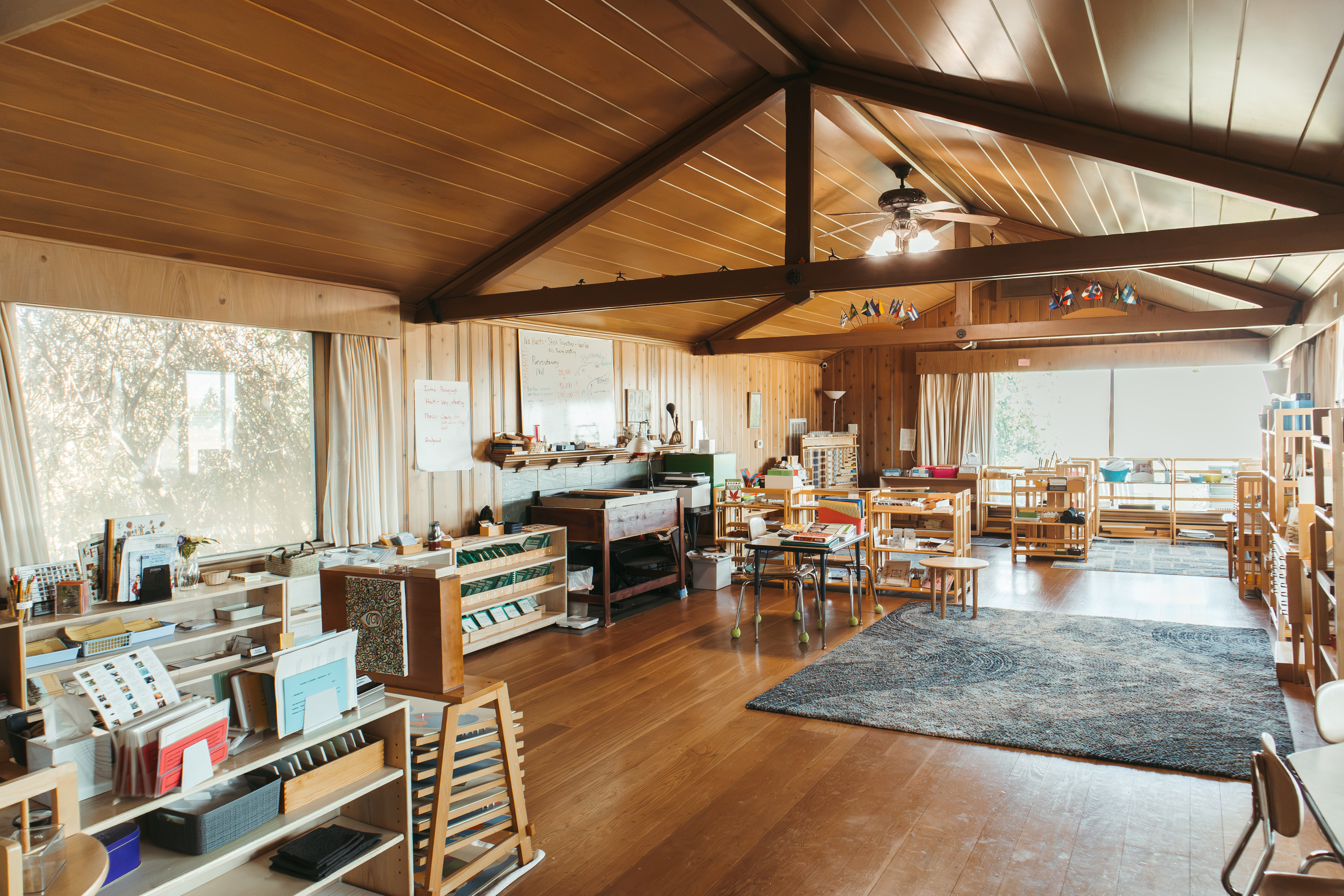
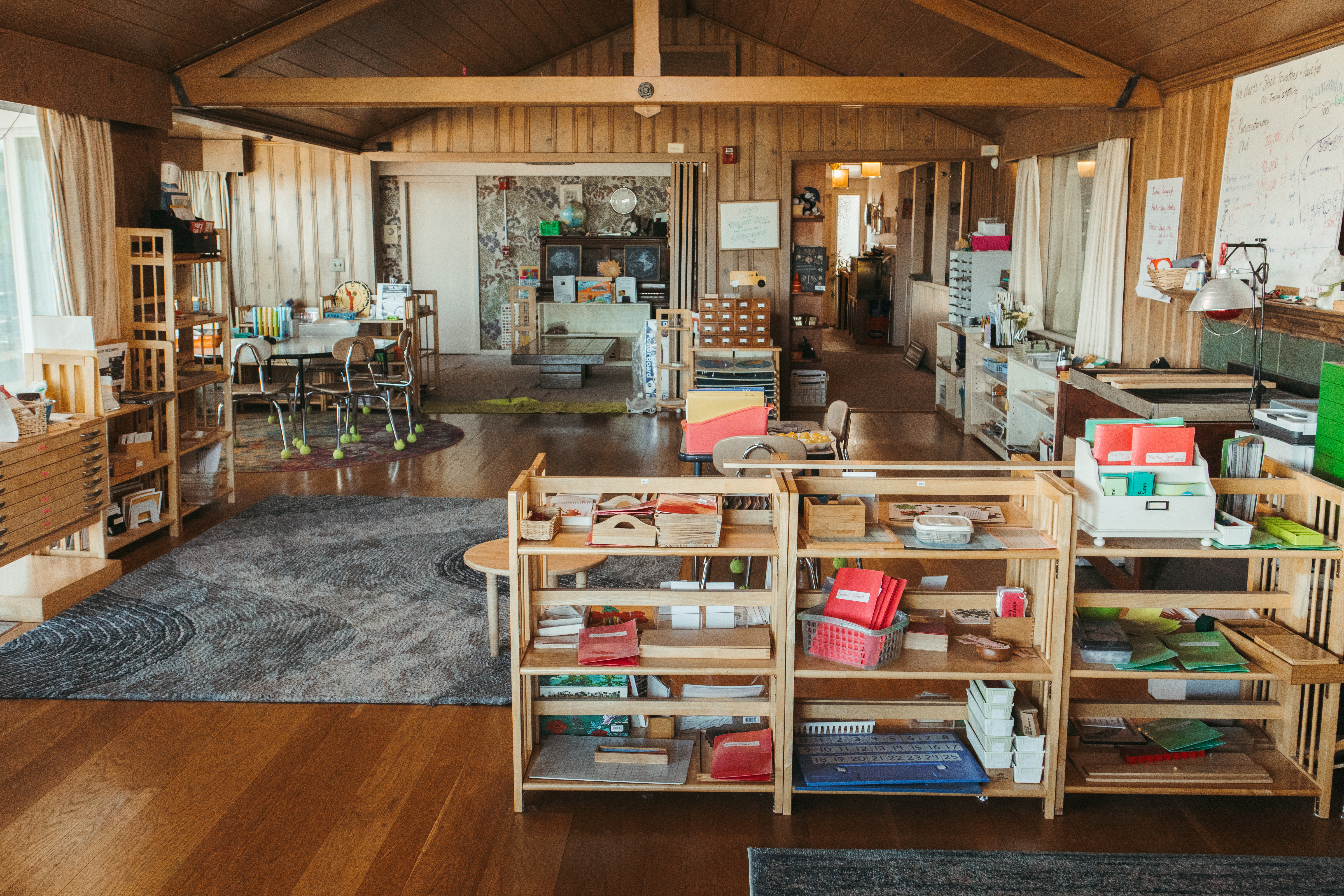
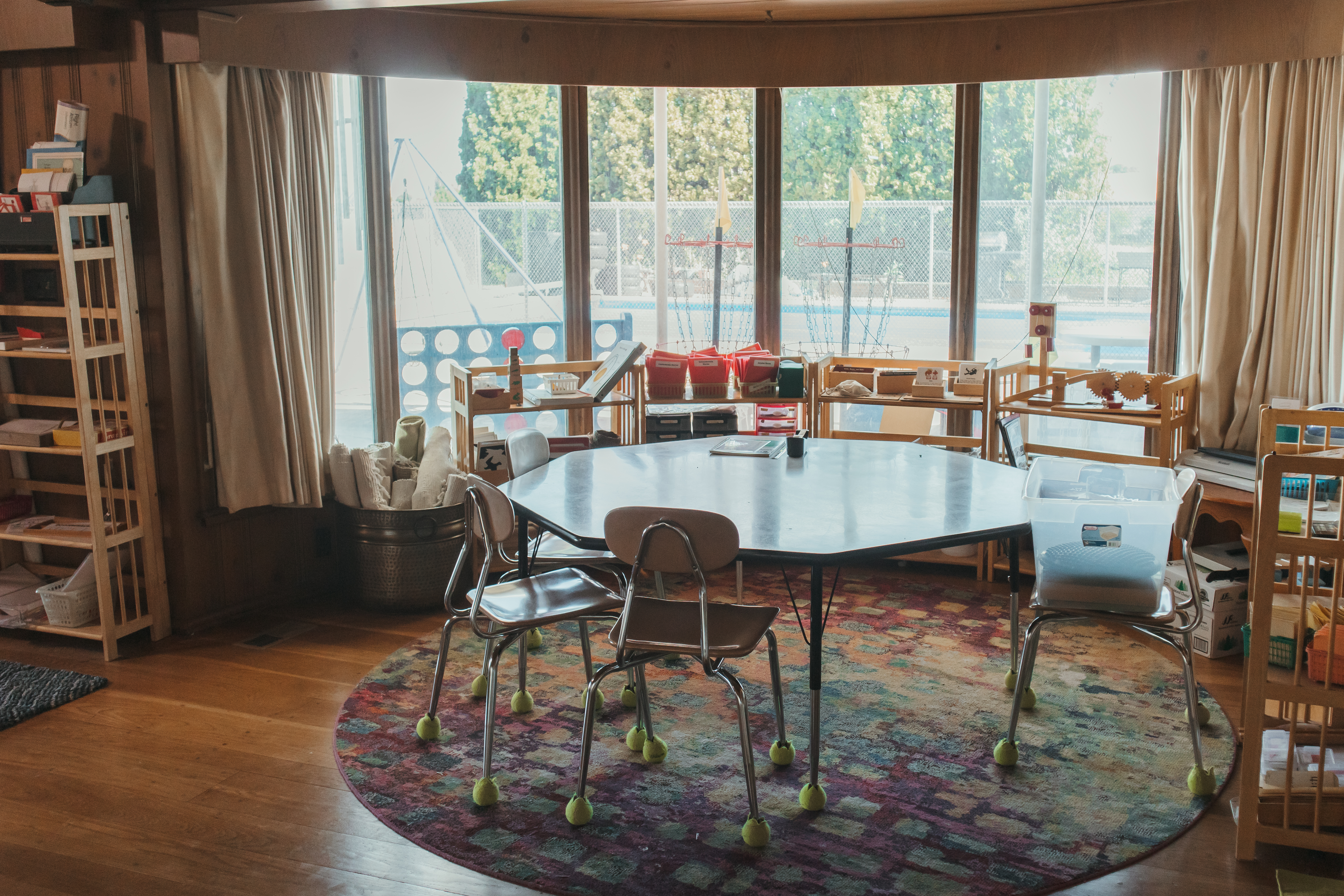
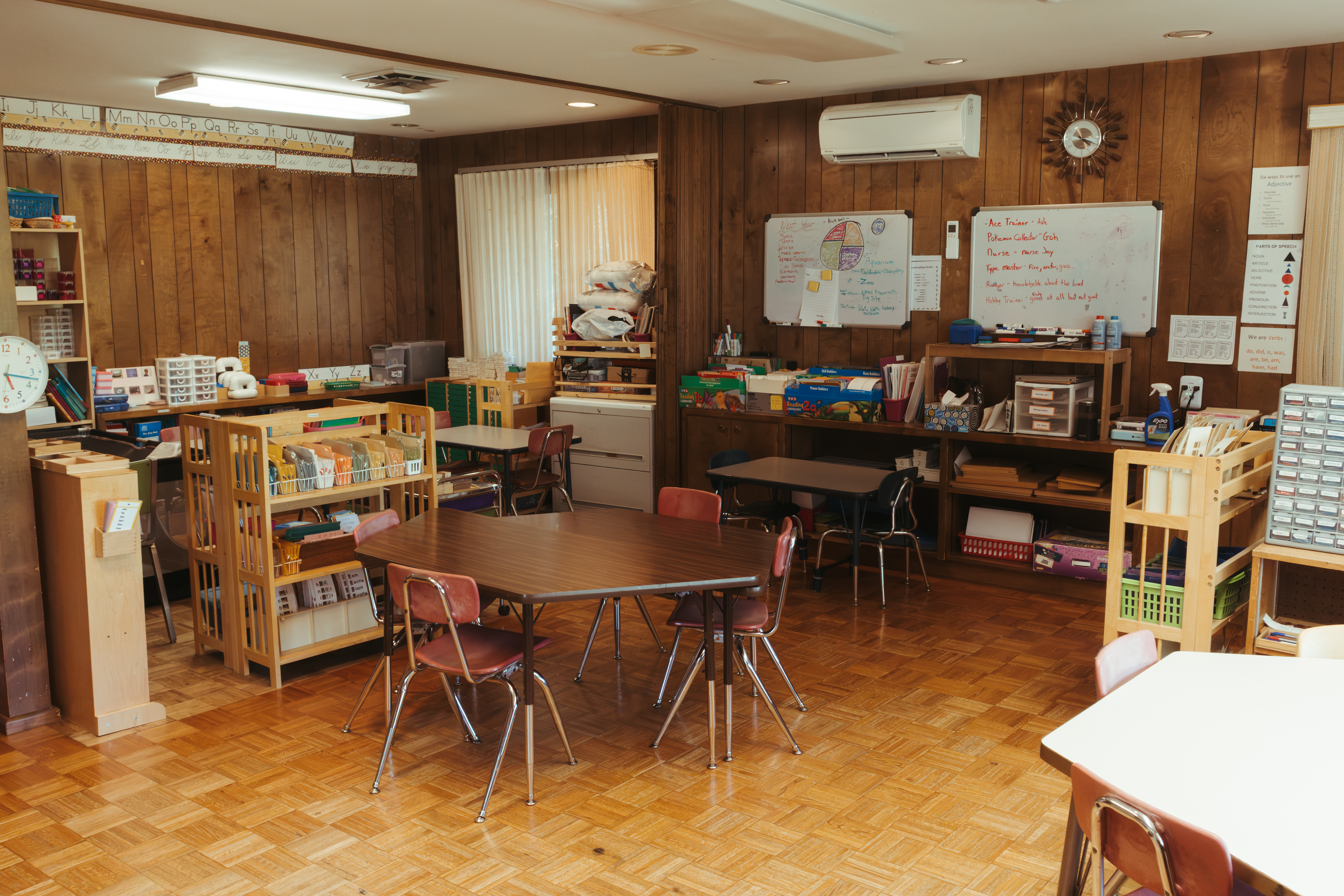
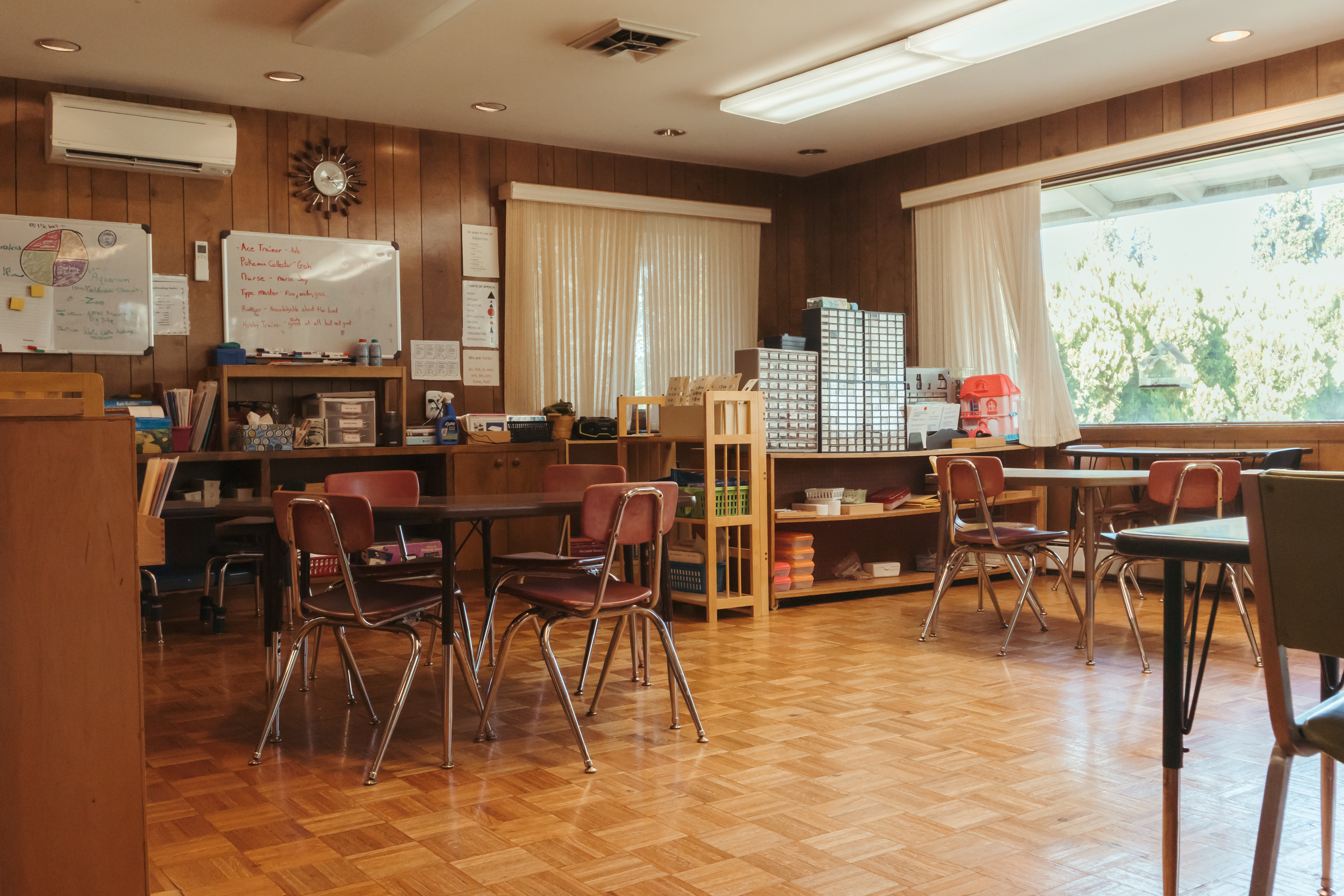
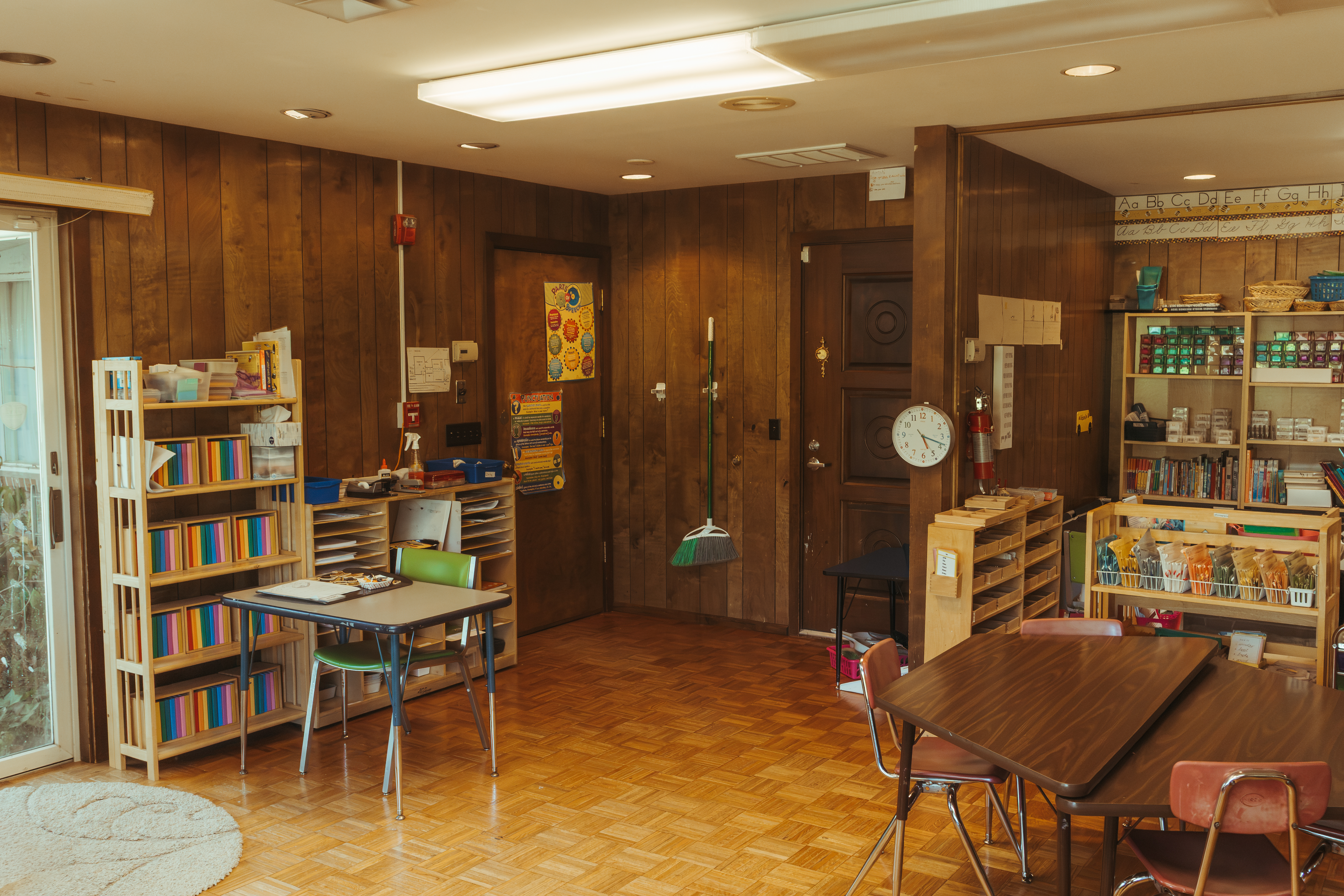
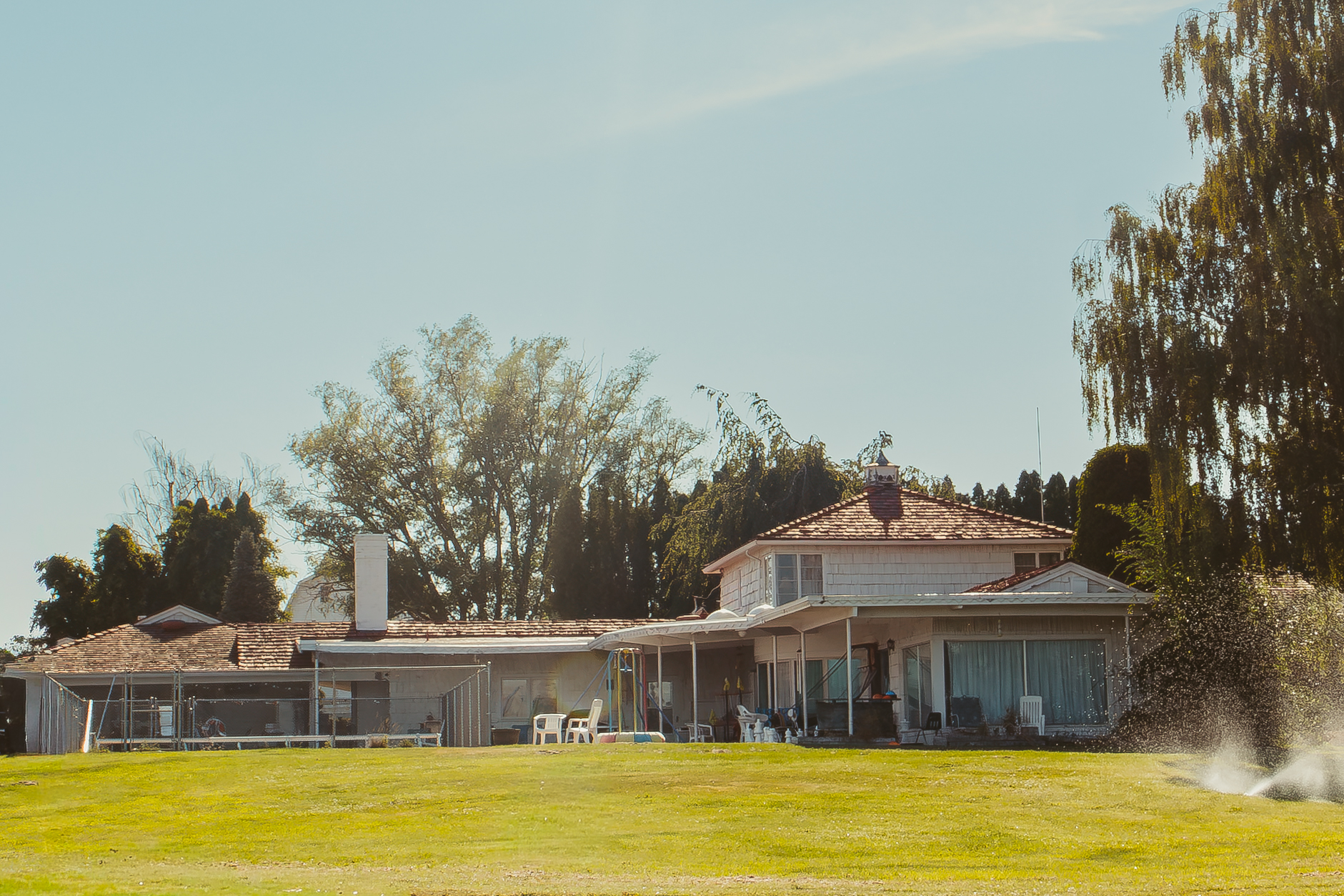
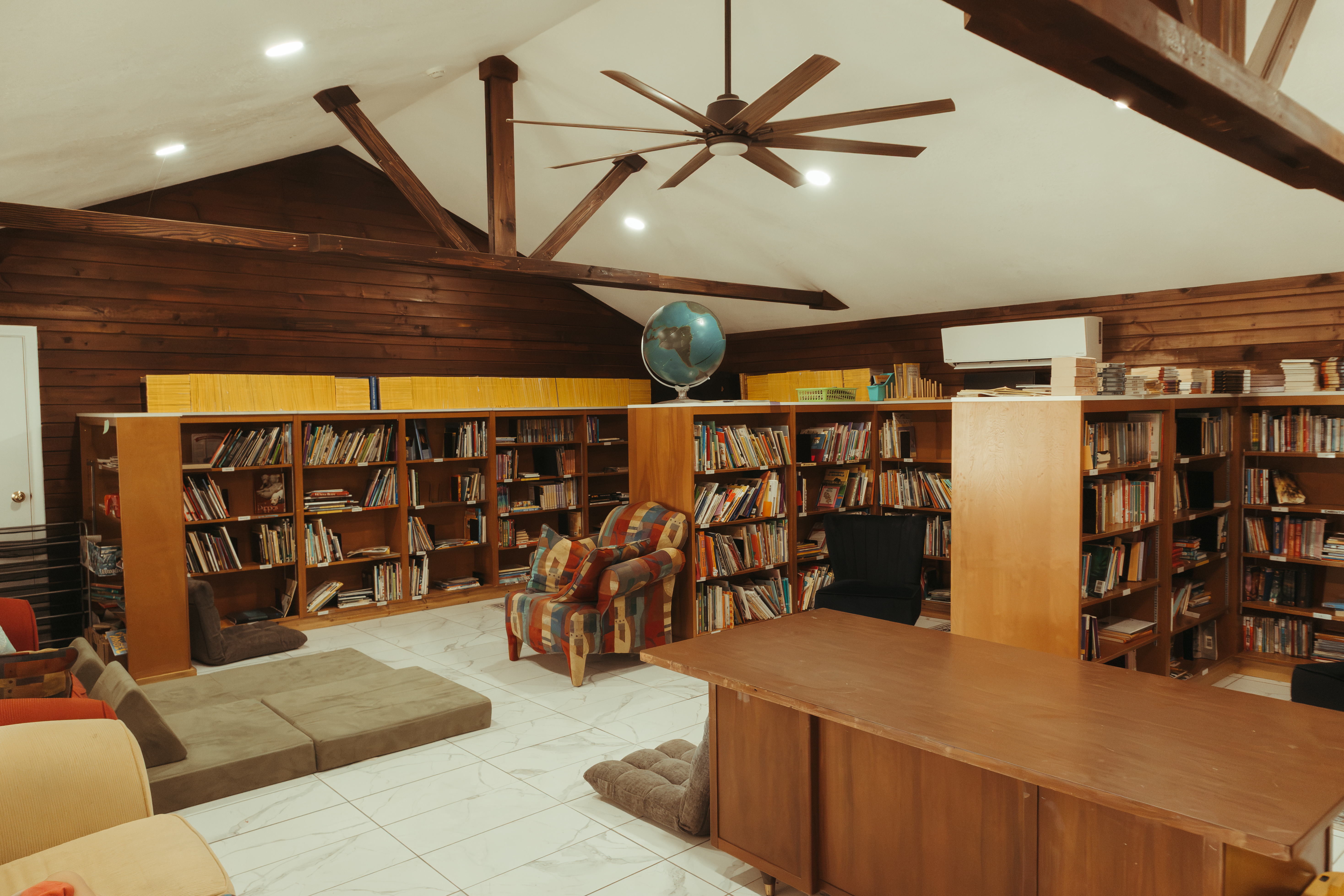
The Elementary Program at Oakridge Ranch is a Montessori Farm School that combines the principles of Montessori education with meaningful, hands-on experiences in nature. Our small class sizes allow teachers to truly know each child, providing individualized instruction that follows each student's interests, strengths, and academic needs.

For children ages 6 to 13 years old.
Program options include:

School Year

180 days
September-Mid June

Year Round
240 days
Full Year

Summer
50 days
Mid June-August
Enrichment & Experiential Learning
At Oakridge Ranch, learning extends far beyond the classroom. Throughout the year, students participate in enriching seasonal activities that promote physical wellness, confidence, teamwork, and a love of trying new things. These experiences provide opportunities for students to build lifelong skills while creating lasting memories with their classmates.
Each Season offers unique opportunities for exploration:
Fall: Tennis
Winter: Skiing
Spring: Golf
Summer: Daily Swimming
Students also enjoy educational field trips throughout the year that connect classroom learning to the world around them. Regular outings include visits to local museums, the Yakima Valley Libraries, the Capitol Theatre, local orchards, farms, parks, and other community destinations that inspire curiosity and bring learning to life.
Enrichment & Experiential Learning
At Oakridge Ranch, learning extends far beyond the classroom. Throughout the year, students participate in enriching seasonal activities that promote physical wellness, confidence, teamwork, and a love of trying new things. These experiences provide opportunities for students to build lifelong skills while creating lasting memories with their classmates.
Each Season offers unique opportunities for exploration:
Fall: Tennis
Winter: Skiing
Spring: Golf
Summer: Daily Swimming
Students also enjoy educational field trips throughout the year that connect classroom learning to the world around them. Regular outings include visits to local museums, the Yakima Valley Libraries, the Capitol Theatre, local orchards, farms, parks, and other community destinations that inspire curiosity and bring learning to life.
Curriculum
Guided by Montessori-trained lead teachers who participate in annual Montessori professional development, students are encouraged to ask questions, think critically, and take ownership of their learning. Challenging, purposeful work helps children develop perseverance, confidence, and a genuine love of learning while building strong academic skills across all subject areas.
For academic instruction, students are grouped into Lower Elementary (Grades 1–3) and Upper Elementary (Grades 4–8), allowing lessons to be tailored to each developmental stage while maintaining individualized learning.
Life at the Ranch extends learning beyond the classroom walls. Students care for animals, tend gardens, explore the natural world, and participate in projects that connect classroom concepts to real-life experiences. While academic instruction is divided into lower and upper elementary GROUPS (Grades 1-3 and 4-8 respectively), students come together throughout the day for lunch, music, outdoor exploration, and extracurricular activities, fostering a close-knit community across all grade levels.
Our mixed-age environment encourages leadership, collaboration, and mutual respect, with older students mentoring younger peers and everyone contributing to the success of the Ranch community. By combining individualized learning, meaningful responsibility, and authentic farm experiences, the Oakridge Ranch Elementary Program prepares children to become capable, compassionate, and lifelong learners.

Practical Life
Practical Life activities help children develop independence, coordination, concentration, and confidence through meaningful everyday tasks.
Children may engage in:
Food preparation
Caring for plants
Feeding classroom animals
Grace and courtesy lessons
Fine motor development
Cleaning and classroom care
Responsibility and self-help skills
Animal care: grooming, feeding, and maintaining their environment
Laundry, dishes, grounds maintenance

Sensorial
Sensorial materials help children refine their senses while developing observation, concentration, classification, and critical thinking skills.
Children explore:
Size and dimension
Color
Sound
Texture
Weight
Shape and form
Visual discrimination
Volume

Language
Children build strong foundations for reading, writing, communication, and literacy through a sequential Montessori language curriculum.
Areas of exploration include:
Phonemic awareness
Letter sounds
Vocabulary development
Reading and comprehension
Creative expression
Handwriting and written language
Parts of speech
Language mechanics
Essay writing
Research writing
Creative writing including poetry

Mathematics
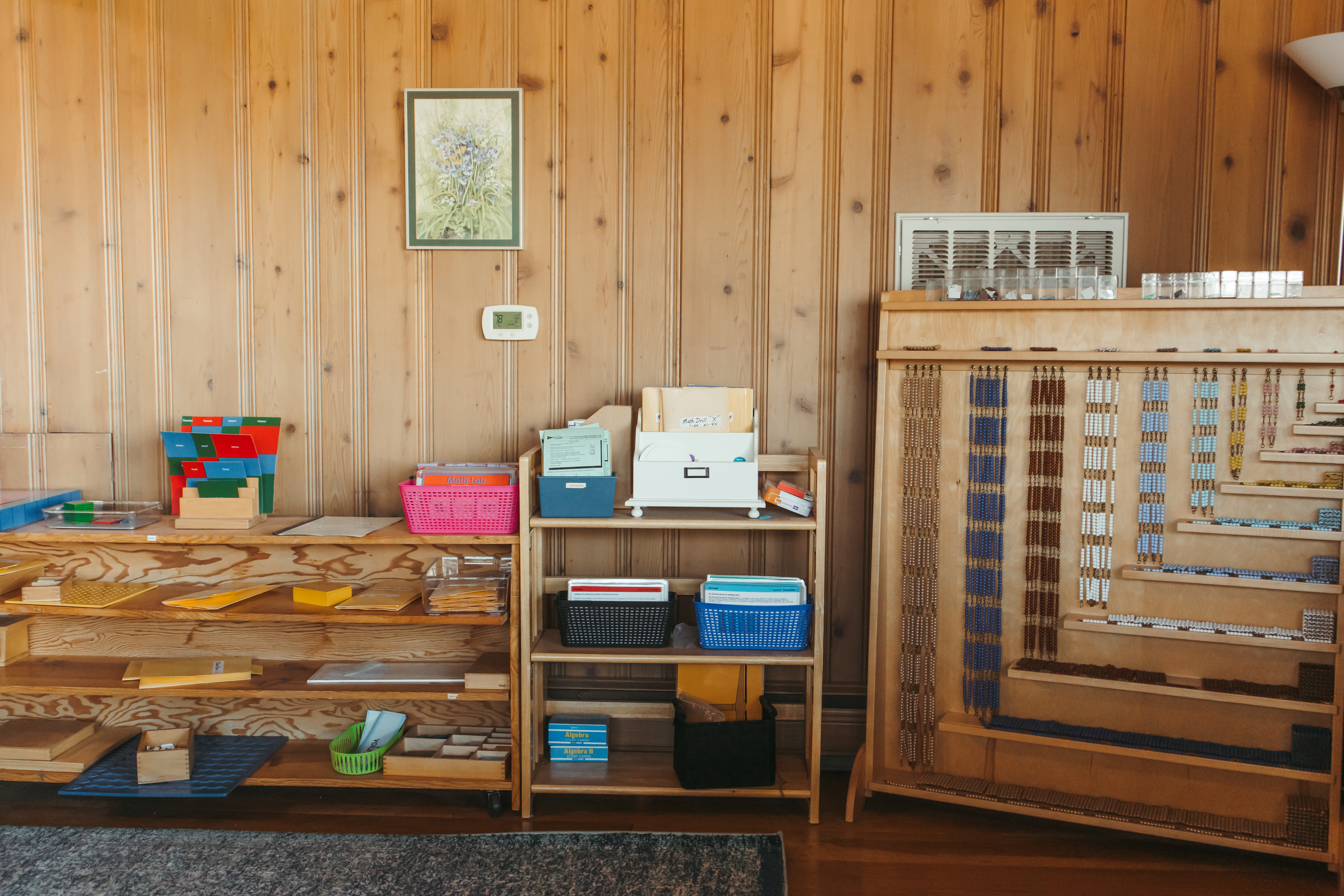
Through concrete Montessori materials, children develop a deep understanding of mathematical concepts before moving toward abstraction.
Areas of exploration include:
Number sense
Counting and quantity
Place value
Addition and subtraction
Problem solving
Multiplication and division
Properties and characteristics of different geometric shapes
Algebra

Science
Through carefully selected Montessori materials and guided outside exploration, children develop the ability to recognize, categorize, and communicate about different parts of the natural world.
Areas of exploration include:
Specific scientific vocabulary
Concepts of mammals
Classification of different types of animals (vertebrates, invertebrates, reptiles, fish, amphibians, birds, mammals)
Parts of the animals
Parts of the plants
Living versus not living
What organisms live where (land, water, air)
Biology: anatomy of animals, categorization, and reproductive science
Chemistry: setting up and conducting experiments
Earth Sciences
Learning the scientific method and writing research papers

Geography
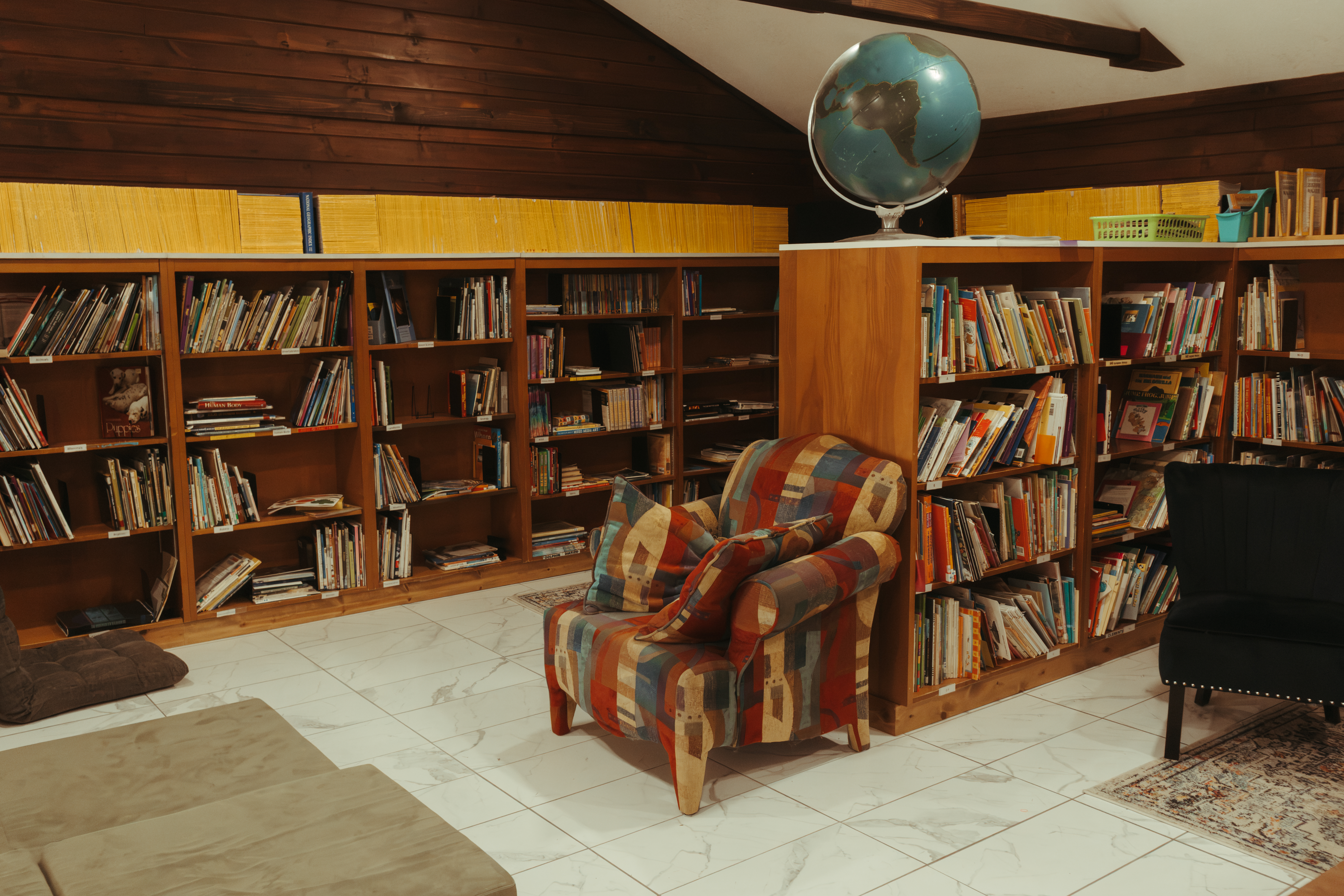
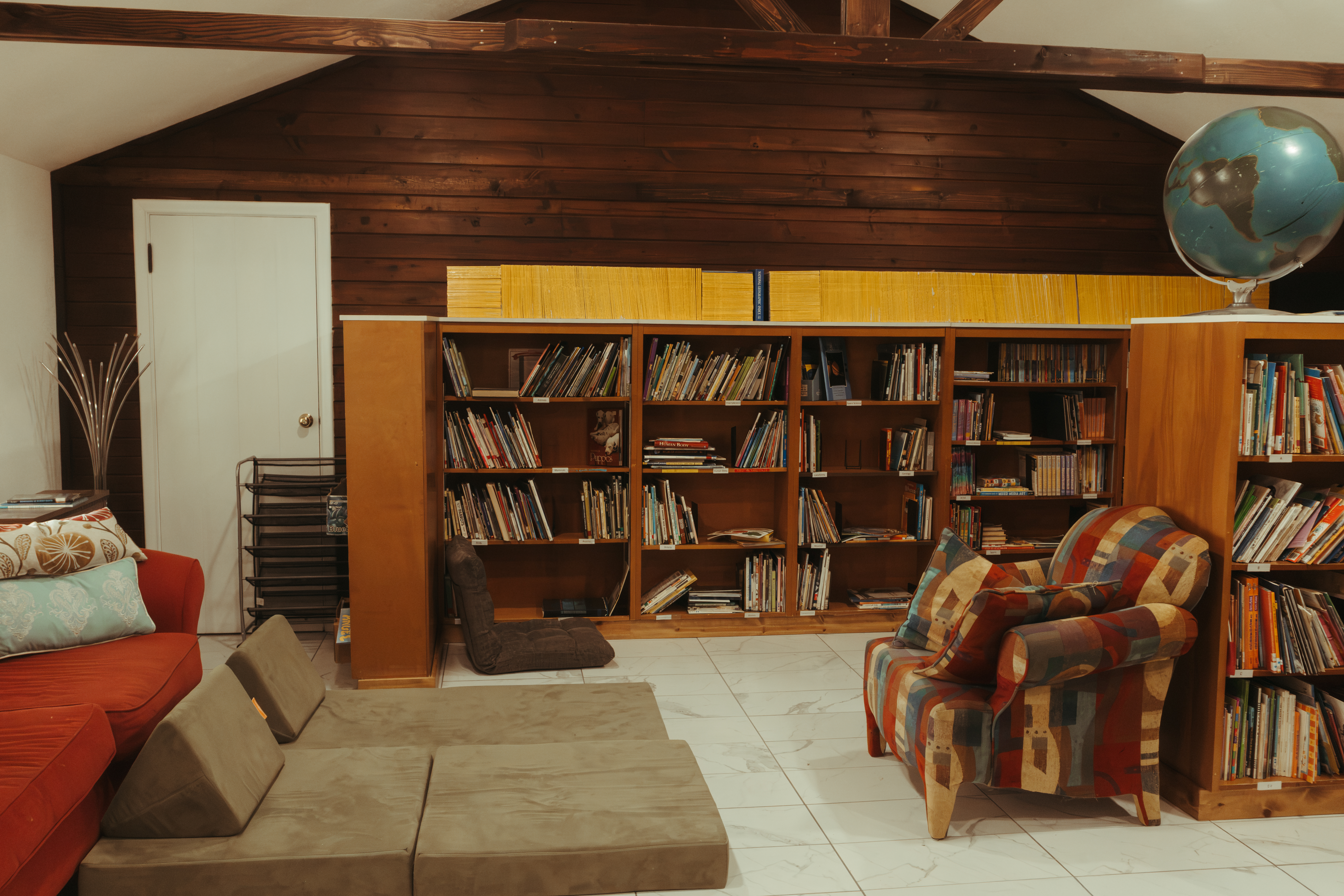
Through access to hands-on maps, globes, and Montessori materials children gain a solid foundational knowledge of geographical placement.
Areas of exploration include:
Identification of land versus water
Continents and their names
Ocean names and identification
The countries of each continent
Political Geography: People that live in different places
Where different plants and animals are found
Country specific research: learning about other countries socioeconomic status, geopolitical state, currency, languages, natural resources, etc.
Capitols of U.S. states
Capitols of countries around the globe

Cultural Studies
Children begin exploring the world around them through hands-on experiences that inspire wonder and curiosity.
Areas of study include:
Famous landmarks
Zoology in different areas
Cultural celebrations
Children explore carefully curated culture kits featuring: music, objects, one children's toy, a book in the language, and spices from different areas around
Art and music from different cultures
Study of famous people from different countries

History
Children learn about significant historical events, movements, peoples, and periods in order to foster a deep understanding and appreciation of humanity and how the world works.
Areas of study include:
Days of the week and their history
History of famous people and impactful movements
Learning about different historical time periods
Mastering the Five Great Montessori Lessons: 1) History of the Universe, 2) History of Life on Earth, 3) History of Mammals, 4) History of Language/Writing, and 5) History of Math

Arts
Art materials are available for the children throughout the day, allowing them to develop technical skills as well as to freely explore their own unique creative expression.
Areas of exploration include:
Art History: famous artists and their works are introduced
Open invitation to create art
Access to paper, crayons, paint, scissors, glue, beads, etc.
Learning technical skills: proper hand placement for holding pens/brushes/etc., practice coloring inside of lines, and introduction to color theory
Guided art projects
Principles of art: color theory, color families, line types
Learning about famous artists and practicing creating art in their style
Famous art styles and movements
A new art principle or concept is introduced each week

Music
Through Montessori music materials and instruction from guides, children are introduced to foundational and core music concepts from which they can later learn how to read music and play instuments.
Areas of exploration include:
Guided rhythm studies
Introduction to matching pitch
Introduction to what is music how we can create music
Using Montessori bells to learn matching tone and pitch
Children receive guided music lessons twice a week with trained music teachers
Learn how to read music notation
Music theory
Playing instruments: elementary students can explore singing, piano and key boarding, recorders, and string instruments (violin, viola, cello)
Music concerts to hone performance skills (one to two a year)

Enrichment & Outdoor Learning
Learning extends beyond the classroom through experiences that encourage movement, creativity, exploration, and connection to nature.
Children participate in:
Gardening
Nature studies
Animal observations
Field trips
Seasonal swimming Seasonal Skiing
Golf
Tennis
Bee Keeping
Livestock care (goats, donkeys, chickens, rabbits)

Excellence
Curious, Confident Children

Community
It Takes a Village

Whole Child
Mind, Heart, & Character

FOLLOW US


THE SCHOOL
CONNECTION
LEGAL
Copyright 2026. Oakridge Montessori School. All Rights Reserved.